You are packing for a trip you are not taking.
The zip will not close because of the outfits for days that never happen. Here is the outfit maths for a week away, and the non-clothes items that cause the real trouble.
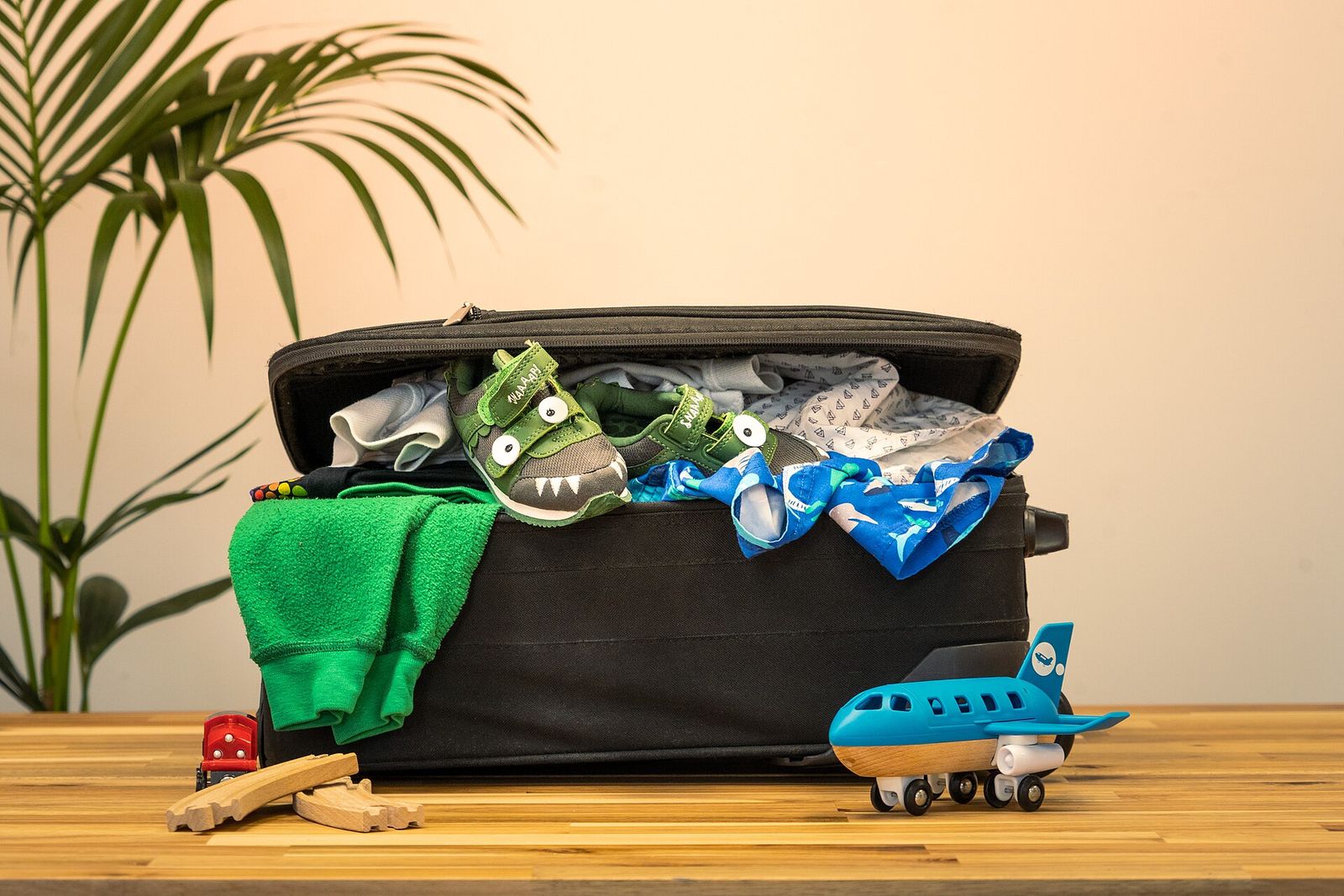
Most overpacking is packing for imagined days.
Open an overstuffed suitcase and you rarely find too many socks. You find the “just in case” outfits: the smart shirt for a dinner nobody booked, the third pair of shoes, the jumper for a cold snap the forecast never mentioned. Each one feels small. Together they are the reason the zip will not close.
The fix is not a magic number of items. It is building the list from the trip you are actually taking: how many days, what weather, what you will be doing, and when you can wash things. Everything below follows from those four facts.
The outfit maths for a week away.
These are starting points, not rules. Adjust them for your own habits, the climate and the people you are packing for.
- Underwear and socks: one per day until your first chance to wash, plus one spare. This is the one category where cutting corners makes a trip miserable.
- Tops: in hot weather, close to one per day. In mild or cool weather most people can wear a top twice, so half the number of days is often enough.
- Bottoms: two or three for a week. Trousers, jeans and skirts are worn many times at home; they can be on holiday too.
- Layers: one warm layer and one rain-proof layer cover most mild trips. Wear the bulkiest one on travel day instead of packing it.
- Shoes: two pairs is enough for most trips: one comfortable pair for long days and one for everything else. Wear the heavier pair.
If the trip is longer than a week, the list should stop growing. Plan a wash instead. That is why Packlight caps its main clothing cycle at seven days: past that point, a sink, a launderette or a hotel service usually costs less effort than carrying another week of clothes.
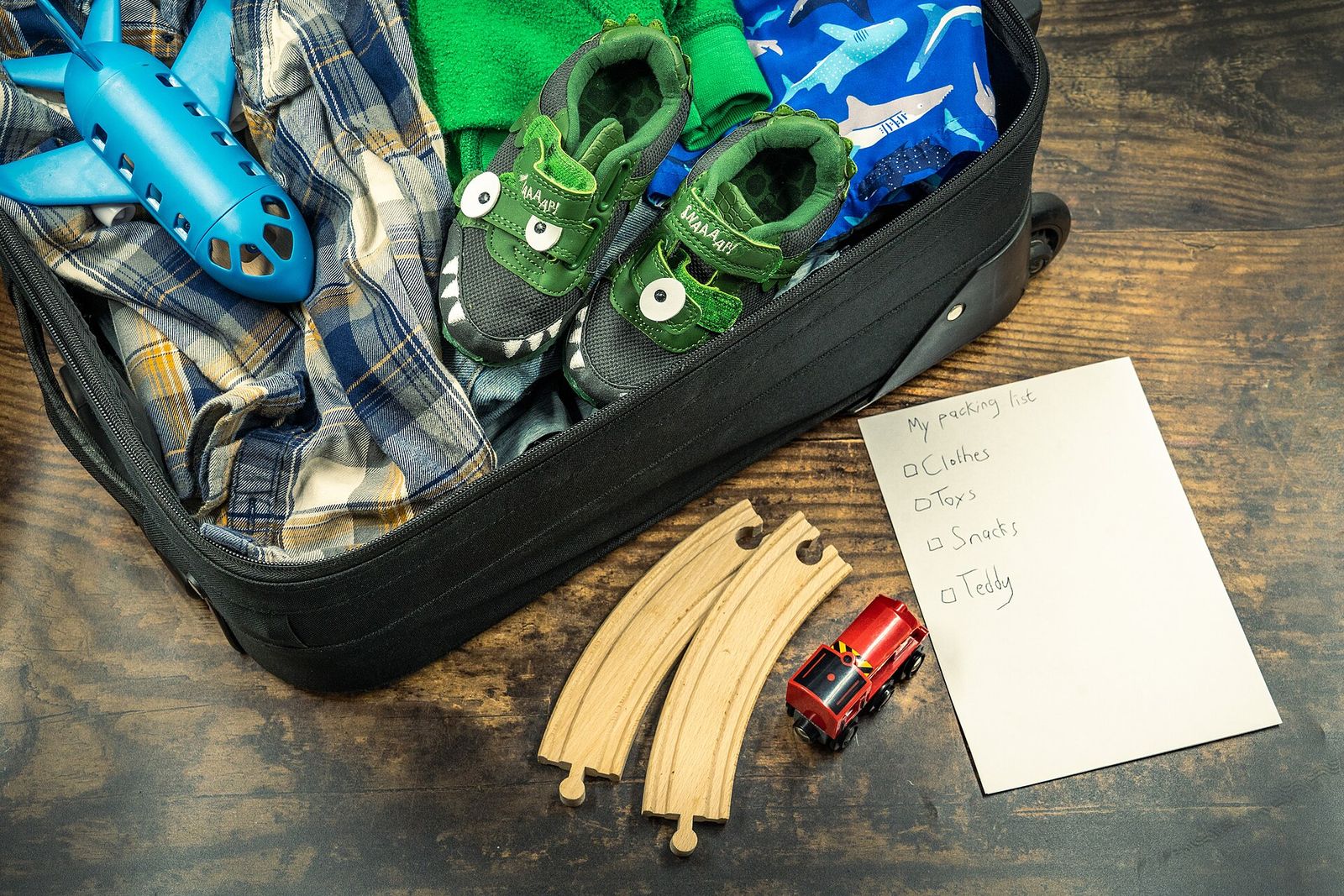
Pack for the forecast, not for every season.
Look at the forecast a few days before you leave, and at typical conditions for the place and month if the trip is further away. Then pick the one item that protects you from the most likely bad day: a light rain shell for wet weather, a warm mid-layer for cold evenings, a hat and long sleeves for strong sun.
Quick-drying fabrics make the laundry plan easier. A thin top that dries overnight on a hanger is worth more on a long trip than a thick one that needs a machine.
The things that are not clothes cause the real trouble.
Forgetting a T-shirt is an inconvenience. Forgetting medicine, a charger or a travel document can end a day, or a trip. Pack these first and keep them in your hand luggage:
- Documents: passport or ID, tickets, bookings and any visa paperwork. Keep a copy somewhere other than your phone.
- Medicines: enough for the whole trip plus a few days, in your cabin bag rather than in checked luggage. Carry a prescription or doctor’s note if the medicine is controlled or unusual.
- Power: phone charger, any plug adapter you need, and a power bank if you use one. Aviation rules generally require spare lithium batteries and power banks to travel in cabin baggage, not in checked bags, and airlines can add their own limits.
- Liquids: at many airports, cabin liquids still have to be in containers of 100 ml or less, often in one clear resealable bag of about a litre. Some airports with newer scanners allow more, and the rules have changed more than once. Check the airport you are leaving from and the one you are coming home from.
Measure the bag before the airline does.
Cabin bag size and weight limits differ between airlines, and often between fares on the same airline. The allowance that matters is the one printed on your booking, not the one on your last trip. Weigh the packed bag at home with a luggage scale or a bathroom scale, and check that it still fits the stated dimensions once the outside pockets are full.
The last ten minutes before you leave.
Lay the packed list next to the bag and check it once, top to bottom. Then ask three questions: Do I have the documents for every border on this trip? Do I have the medicine and chargers I would struggle to replace? Is there anything in here I am only bringing “just in case”? If the answer to the last one is yes, take it out.
Build your own list in Packlight: choose your days, weather and trip style, tick things off, and export a text copy to take with you.
Rules referenced, checked 11 November 2026:
- GOV.UK: hand luggage restrictions at UK airports
- TSA: liquids, aerosols and gels rule
- FAA PackSafe: lithium batteries
Quantities in this guide are practical starting points, not airline rules. Always check the allowance on your own booking.