Your power bank belongs in the cabin, not the hold.
Why spare lithium batteries are banned from checked bags, how to work out a power bank's watt-hours, and the limits for larger batteries.
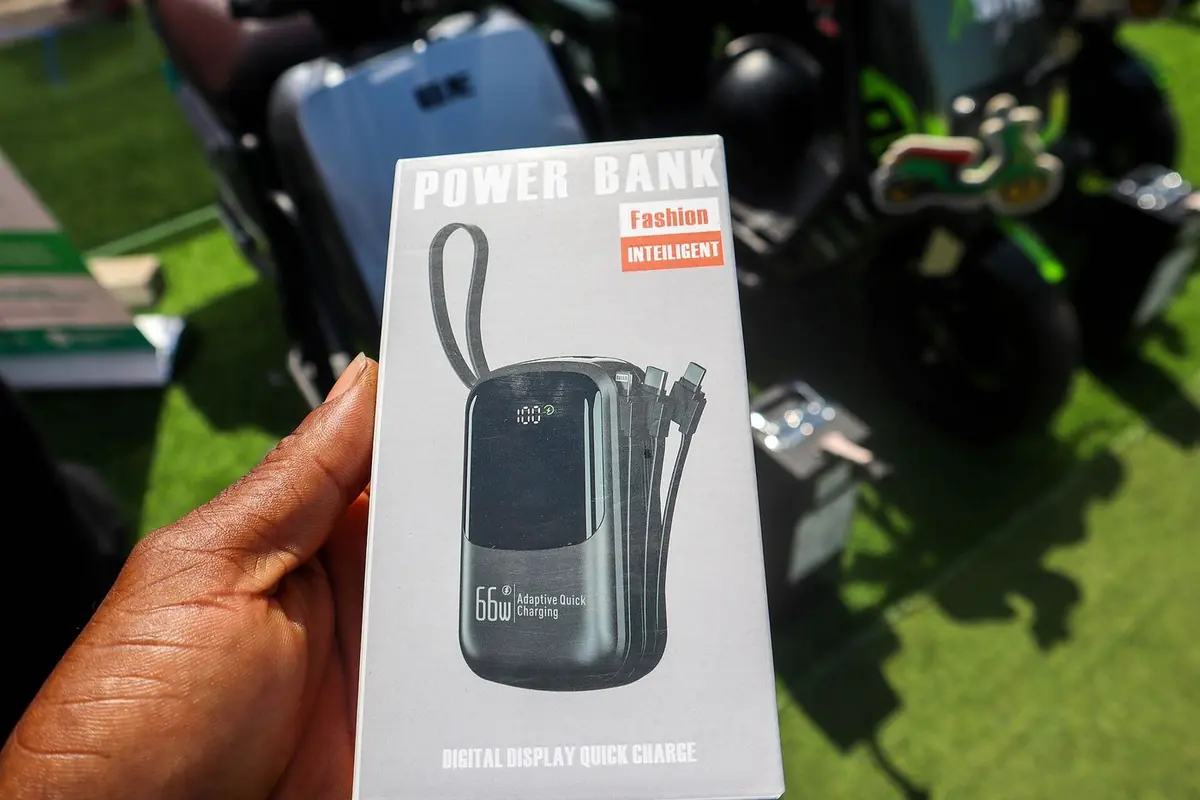
A power bank is one of the most useful things you can pack. It keeps your phone alive for boarding passes, maps, translation and photos on long travel days. It is also one of the few everyday items that comes with strict aviation rules, and getting them wrong can mean having it confiscated at the gate or, worse, packing it somewhere it should never be.
The short version
- Power banks and spare lithium batteries go in your hand luggage, never in checked baggage.
- Most power banks are under 100 watt-hours (Wh) and are allowed without special approval.
- Batteries between 101 and 160 Wh need the airline's approval, and you can usually take no more than two spares.
- Anything above 160 Wh is generally not allowed as a spare battery on a passenger flight.
- Airlines can set stricter rules of their own, including on whether you may use or charge a power bank during the flight.
Why the cabin and not the hold
Lithium-ion batteries store a lot of energy in a small space. If one is damaged, faulty or short-circuited, it can overheat in a process called thermal runaway, which can lead to smoke or fire. In the cabin, crew can see and deal with a problem quickly; they are trained and equipped for it. In the cargo hold, a fire could go unnoticed.
That is why the US Federal Aviation Administration says spare lithium batteries, including power banks and phone battery cases, must be carried in carry-on baggage only. The same principle runs through international dangerous goods guidance published by IATA, and through national rules such as those on GOV.UK.
This applies even when your bag is taken from you at the gate to go in the hold. If a cabin bag is gate-checked, take the power bank and any spare batteries out and keep them with you.
How to work out watt-hours
Many power banks print their capacity in milliamp-hours (mAh) rather than watt-hours. You can convert it yourself:
Wh = (mAh × volts) ÷ 1,000
Use the nominal voltage of the battery cells, which is usually printed on the label and is typically 3.6 or 3.7 volts for lithium-ion cells. A 20,000 mAh power bank at 3.7 V works out at:
20,000 × 3.7 ÷ 1,000 = 74 Wh
That is comfortably under 100 Wh. A 26,800 mAh bank at 3.7 V comes to about 99 Wh, which is right at the limit. Anything bigger than that is likely to fall into the range that needs airline approval.
If the label shows neither watt-hours nor a voltage you can use, be cautious. Security staff may not accept a battery whose rating they cannot read, and an unlabelled power bank is not a good thing to rely on.
The limits in more detail
According to the FAA, lithium-ion batteries are limited to 100 Wh per battery for most passengers. With airline approval, passengers may also carry up to two spare larger lithium-ion batteries rated between 101 and 160 Wh. These larger batteries are typically extended laptop batteries or packs for professional camera and audio equipment, not ordinary phone chargers.
There is generally no fixed limit on the number of small spare batteries, but they must be for your personal use. Carrying a box of new power banks to sell is a different matter and is not allowed in passenger baggage.
Devices with batteries installed, such as phones, laptops and cameras, are treated differently from spares. They can often travel in either cabin or checked baggage, though cabin is preferred, and they should be switched fully off and protected from accidental activation if they go in the hold.
Protect against short circuits
Most battery incidents start with damage or a short circuit. A few simple habits reduce the risk:
- Keep spare batteries in their original packaging, a case, or a small pouch, so the terminals cannot touch coins, keys or other batteries.
- Cover exposed terminals with tape if a battery has no case.
- Do not pack a power bank that is swollen, dented, cracked or that has been dropped hard.
- Keep it somewhere you can reach during the flight, not buried in an overhead locker.
If a device or battery starts to get very hot, smell, smoke or hiss during a flight, tell the cabin crew immediately. Do not try to deal with it yourself.
Rules on using power banks in flight
Separate from what you may carry, some airlines now restrict using or charging power banks on board, or ask that they stay visible rather than in the overhead locker. These policies vary and can change, so check your airline's baggage or dangerous goods page before you fly, especially if you plan to keep a phone or tablet charged on a long flight.
Pack it with a plan
A practical travel power setup is one power bank under 100 Wh, the right charging cable, and a plug adapter for your destination. When you build a list in Packlight, add "power bank (cabin bag)" as a custom item so the reminder about where it goes is right there on the checklist.
Sources checked 11 November 2026:
- FAA PackSafe: lithium batteries
- IATA: lithium batteries
- GOV.UK: hand luggage restrictions at UK airports
Rules change. Always check the official source for your airline, airport and destination before you travel.