Packing for heat is about shade, not shorts.
How to pack for a hot-weather trip: clothes that help in the heat, sun protection that works, the UV index, and how to stay hydrated.
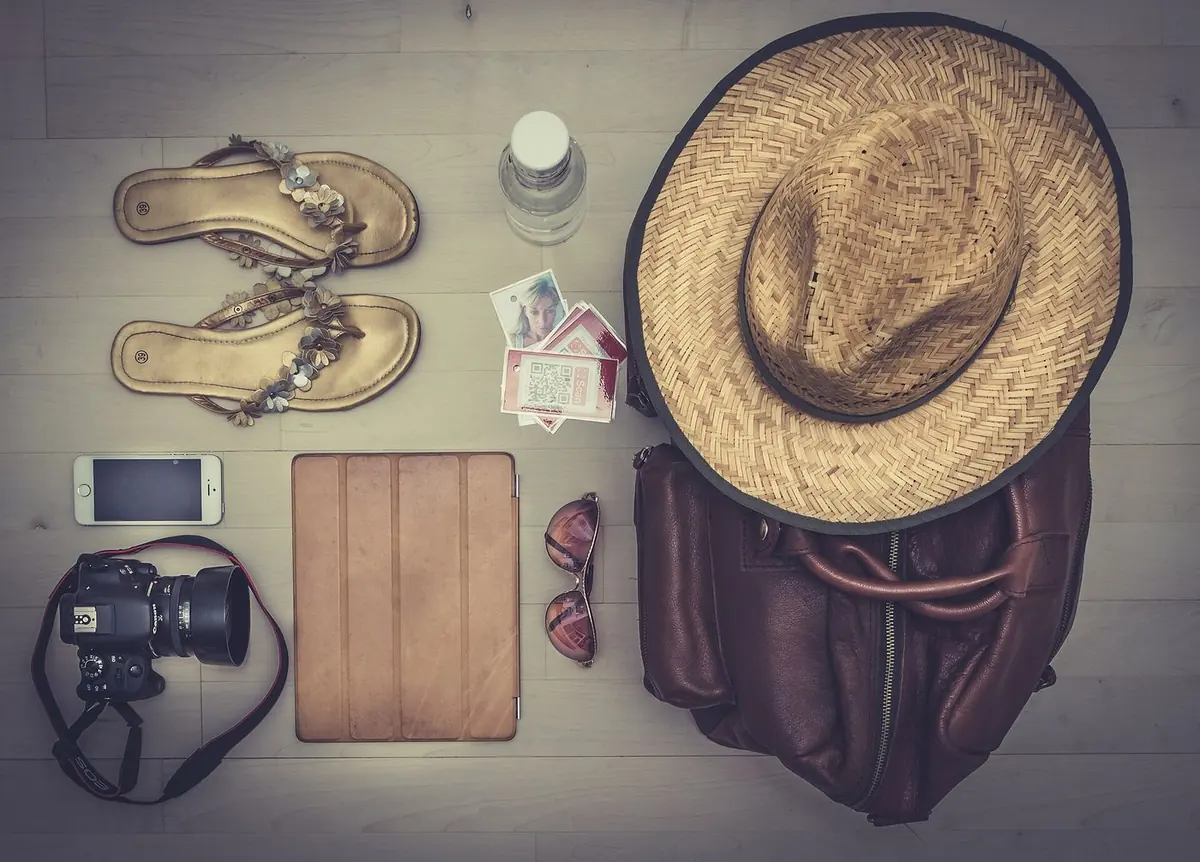
Hot-weather packing looks easy. Throw in a few T-shirts, shorts and a swimsuit and you are done. Then you spend the second day of the trip sunburnt across the shoulders, sweating through a shirt that will not dry, and hunting for a pharmacy that sells after-sun. A little planning makes a big difference, and most of it is about protecting yourself rather than wearing as little as possible.
Clothes that help in the heat
The best hot-weather clothes are loose, light in colour and made from fabric that dries quickly.
- Loose fits let air move against your skin, which helps sweat evaporate and cool you down. Tight clothes trap heat.
- Light colours reflect more sunlight than dark ones.
- Linen, light cotton and technical fabrics each have strengths. Linen is breathable and dries fast; cotton is comfortable but slow to dry once soaked; synthetic travel fabrics dry quickly and wash easily in a sink.
- Long, thin sleeves and trousers can be cooler in strong sun than short ones, because they keep direct sunlight off your skin. They are also useful for visiting religious sites where shoulders and knees should be covered.
For a week in the heat, plan on close to one top per day, since sweat makes re-wearing harder than in mild weather. Shorts and skirts can be worn several times. Pack one light layer for air-conditioned buses, trains and restaurants, which can be surprisingly cold.
Sun protection that works
Sunburn is the most common way a hot-weather trip goes wrong. The NHS advice is a good, simple standard:
- Spend time in the shade when the sun is strongest. In the UK that is between 11am and 3pm from March to October, and closer to the equator the strong-sun period can be longer.
- Cover up with suitable clothing, a hat and sunglasses.
- Use sunscreen with a sun protection factor (SPF) of at least 30 to protect against UVB, and at least 4-star UVA protection (or the UVA logo in a circle used in the EU).
- Use enough, and reapply frequently, especially after swimming or towel-drying.
- Take extra care with children, and keep babies under six months out of direct sunlight.
The NHS is also clear that you should not rely on sunscreen alone. A wide-brimmed hat, sunglasses that block UV, and a long-sleeved top for the middle of the day do a lot of the work.
Learn to read the UV index
Temperature tells you how hot it feels, not how strong the sun is. A cool, breezy day at altitude or on the water can still burn you quickly. The UV index, developed with the World Health Organization, measures the strength of sunburn-producing ultraviolet radiation on a scale that starts at zero.
Many weather apps show it. As a rule of thumb, the NHS suggests that if the UV index is 3 or higher, you should consider protecting your skin. Values of 8 and above are very high, and you will find them regularly in summer in the tropics, at high altitude and in places such as southern Europe, Australia and southern Africa.
Check the UV index for your destination before you pack. It tells you whether sun protection is a minor detail or the most important thing in your bag.
Water and heat
Heat makes you lose water and salt through sweat, and you may not notice until you feel unwell. Pack a reusable water bottle and refill it often. In places where tap water is not safe to drink, use bottled or treated water and avoid ice of unknown origin.
Heat exhaustion can cause headache, dizziness, nausea, heavy sweating and cramps. If that happens, move somewhere cool, drink water, and rest. Heatstroke, where the body can no longer cool itself, is a medical emergency. Planning the hottest part of the day around shade, a long lunch or an indoor museum is not lazy; it is how people who live in hot places get through summer.
What else goes in the bag
The CDC's travel packing guidance includes items that are particularly useful in hot climates:
- sunscreen and lip balm with sun protection
- insect repellent with an active ingredient such as DEET or picaridin, especially where mosquito-borne illnesses occur
- hand sanitiser for places where washing facilities are limited
- any regular medicines, in your hand luggage, with extra for delays
Some medicines make skin more sensitive to sunlight. If you take one, ask a pharmacist before you travel.
A hot-weather checklist
Choose "hot" as the weather in Packlight and the list will lean towards lighter clothing and sun protection. Then add your own essentials: a hat you will actually wear, sunglasses, a reusable bottle, and a light long-sleeved layer. If you are flying with hand luggage only, remember that sun cream counts as a liquid, so read our guide to the 100 ml rule before you pack it.
Sources checked 11 November 2026:
Rules change. Always check the official source for your airline, airport and destination before you travel.